
In this guide, we explain how to dilute SLES 70% to 28%, the correct dilution ratio, common viscosity problems, and how an industrial SLES 70 dilution system can help manufacturers achieve consistent production.
1. What Is SLES 70%?
SLES, or Sodium Lauryl Ether Sulfate, is an anionic surfactant commonly used in cleaning and personal care formulations.
It is valued for its:
- Excellent foaming characteristics
- Effective cleansing and wetting properties
- Ability to emulsify oils and other substances
- Compatibility with many other surfactants
- Versatility in industrial and consumer formulations
Commercial SLES is available in different concentrations, particularly SLES 70% and SLES 28%.
SLES 70 percent refers to a concentrated surfactant raw material containing approximately 70% active matter by weight. It is typically supplied as a highly viscous paste or gel.
SLES 28%, on the other hand, contains approximately 28% active matter and is generally easier to pump, transfer, and incorporate into liquid formulations.
Difference Between SLES 70% and SLES 28%
| Parameter | SLES 70% | SLES 28% |
|---|---|---|
| Active matter | Approx. 70% | Approx. 28% |
| Appearance | Thick paste or gel | Generally pourable liquid |
| Viscosity | High | Usually lower |
| Handling | Requires suitable pumping equipment | Easier liquid handling |
| Transportation | Less water transported | More water transported |
| Applications | Concentrated raw material | Liquid formulation feedstock |
Both grades provide essentially the same type of surfactant functionality, but their concentrations and handling characteristics differ significantly.
2. Why Is SLES 70% Diluted to 28%?
The primary purpose of SLES dilution is to convert a concentrated raw material into a more manageable liquid without changing its fundamental surfactant chemistry.
Easier Pumping and Handling
Concentrated SLES can be difficult to transfer through pipelines using conventional pumping systems.
Dilution can reduce handling viscosity, making the material easier to pump, measure, and process.
Better Mixing in Formulations
Many detergent and personal care formulations contain additional surfactants, fragrances, preservatives, salts, and other ingredients.
Using pre-diluted SLES can simplify incorporation into these formulations.
Lower Transportation and Storage Requirements
Purchasing concentrated SLES allows manufacturers to transport less water and perform dilution at their own production facilities.
Consistent Production Quality
A properly engineered dilution process helps maintain consistent active matter, mixing uniformity, and batch quality.
For industrial manufacturers, these advantages make a suitable SLES 70 dilution system an important consideration when planning high-volume production.
3. SLES 70% to 28% Dilution Ratio and Calculation
One of the most common questions among detergent manufacturers is:
How much water is required to dilute SLES 70% to 28%?
The answer can be calculated using a simple mass-balance formula.
SLES Dilution Formula
SLES 70% required (kg) = Final batch weight (kg) × 28 ÷ 70
Water required (kg) = Final batch weight (kg) − SLES 70% required (kg)
These calculations assume the incoming SLES contains exactly 70% active matter and that no other ingredients are added.
Example: Preparing 1,000 kg of SLES Liquid 28%
Suppose a detergent manufacturer wants to produce 1,000 kg of SLES liquid containing 28% active matter.
Step 1: Calculate concentrated SLES
1,000 × 28 ÷ 70 = 400 kg
Step 2: Calculate water requirement
1,000 − 400 = 600 kg
Therefore, the theoretical batch composition is:
| Raw Material | Quantity |
|---|---|
| SLES 70% | 400 kg |
| Water | 600 kg |
| Total SLES 28% solution | 1,000 kg |
The resulting solution contains:
400 × 0.70 = 280 kg of active SLES
280 ÷ 1,000 × 100 = 28% active matter
SLES 70% to 28% Dilution Ratio Chart
| Final Batch Size | SLES 70% | Added Water |
|---|---|---|
| 100 kg | 40 kg | 60 kg |
| 250 kg | 100 kg | 150 kg |
| 500 kg | 200 kg | 300 kg |
| 1,000 kg | 400 kg | 600 kg |
| 5,000 kg | 2,000 kg | 3,000 kg |
4. Step-by-Step Process for Diluting SLES 70% to 28%
The industrial dilution process should be designed to achieve uniform mixing while avoiding excessive foam, gel formation, and material loss.
Step 1: Prepare the Mixing Equipment
Begin by selecting a suitable mixing vessel and agitation system.
Depending on production capacity and process requirements, an industrial setup may use:
- Stainless steel mixing tank
- Agitator or industrial mixer
- Inline high-shear homogenizer
- Suitable transfer or metering pumps
- Temperature monitoring system
- Recirculation pipeline
- Weighing or flow measurement equipment
The equipment should be compatible with the chemical formulation and designed to handle concentrated SLES.
Step 2: Add the Required Water
Charge the calculated quantity of clean process water into the mixing tank.
Treated water, such as RO or demineralized water, may be preferable when formulation consistency and low mineral content are important.
A controlled process temperature of approximately 25–35°C is commonly recommended for high-active surfactant dilution, although the final operating range should follow the raw-material supplier’s guidance and process validation.
Ensure sufficient water is available for effective circulation before introducing the concentrate.
Step 3: Start the Mixing System
Start the agitator or inline circulation system before adding concentrated SLES.
The objective is to establish controlled mixing throughout the vessel.
Mixing intensity should be selected carefully. Excessive surface turbulence can incorporate air into the product, increasing foaming and complicating viscosity control.
An appropriately configured inline homogenizer can help rapidly disperse the concentrated material into the water stream.
Step 4: Gradually Add SLES 70%
Introduce the required quantity of SLES 70% into the water at a controlled rate.
The concentrate should be added to the water, rather than adding water into a vessel containing concentrated SLES.
This order of addition is particularly important because SLES can form highly viscous gel structures at intermediate concentrations.
For an industrial recirculation system, the concentrate can be metered into the circulating water stream immediately before a suitable inline mixing head.
This arrangement promotes rapid dilution and minimizes local regions of excessively concentrated material.
Step 5: Continue Mixing Until Uniform
Maintain mixing or recirculation until the diluted SLES becomes uniform.
Check for:
- Undissolved SLES lumps
- Visible gel particles
- Excessive foaming
- Uneven product consistency
- Abnormal changes in viscosity
Mixing duration depends on batch size, raw-material characteristics, equipment design, temperature, and flow rate. There is no universal mixing time suitable for every plant.
Step 6: Check the Final Product Quality
Before transferring the finished SLES liquid 28 to storage or further processing, verify the required quality parameters.
Typical checks include:
| Quality Parameter | Purpose |
|---|---|
| Active matter | Confirm the target concentration |
| SLES viscosity | Verify handling and formulation requirements |
| pH | Check compliance with the product specification |
| Appearance | Identify gel particles, cloudiness, or contamination |
| Temperature | Ensure consistent measurement and handling |
| Microbiological quality | Assess suitability for the intended storage and application |
For reliable viscosity comparisons, use a defined test temperature and measurement method.
The resulting SLES solution can then be transferred to a suitable storage tank or used as an intermediate raw material.
5. Understanding SLES Viscosity During Dilution
One of the biggest technical challenges in converting SLES 70% into SLES 28% is controlling viscosity.
SLES viscosity does not decrease uniformly as water is added.
Under certain concentration and temperature conditions, the surfactant forms highly viscous liquid-crystalline structures.
This means that adding a small quantity of water directly to SLES 70% can initially make the mixture thicker rather than thinner.
Why Does SLES Form a Gel During Dilution?
When concentrated SLES interacts with water, the arrangement of surfactant molecules changes.
At intermediate concentrations, structured phases can develop, producing a thick, gel-like material.
This can create serious processing problems, including:
- Difficulties in pumping and circulation
- Undissolved gel lumps
- Longer mixing cycles
- Increased mechanical load on equipment
- Inconsistent product quality
The exact viscosity behaviour depends on the SLES grade, active matter, electrolyte content, temperature, and mixing conditions.
How to Control SLES Viscosity
Manufacturers should focus on four important factors:
- Correct addition sequence: Always introduce concentrated SLES into an adequately mixed water phase.
- Effective mixing: Use equipment capable of rapidly dispersing the concentrate and preventing local gel formation.
- Temperature control: Maintain a controlled temperature appropriate for the supplied grade.
- Minimize aeration: Avoid unnecessary air incorporation, which can significantly increase apparent viscosity.
An important consideration is that 28% active matter is close to a concentration where some SLES grades can develop high viscosity. Certain high-shear mixing guidelines recommend operating at or below approximately 27% for reliable processing.
Therefore, manufacturers targeting exactly 28% should verify the actual material’s viscosity and flowability through laboratory or pilot-scale trials before finalizing the equipment design.
6. Which Machinery Is Required for SLES 70% to 28% Dilution?
Selecting appropriate mixing machinery is essential for reliable industrial processing.
A basic mixing tank may be sufficient for certain small-scale applications, but larger batches and difficult-to-disperse materials can benefit from an engineered mixing and recirculation system.
Industrial Mixing Tank

A mixing tank provides the primary vessel for charging water, introducing concentrated SLES, and maintaining product circulation.
Depending on the application, the vessel may include a suitable agitator, temperature control, weighing arrangements, and connections for external recirculation.
Inline Homogenizer

An inline homogenizer uses a rotor-stator mixing mechanism to rapidly disperse materials passing through the mixing chamber.
When correctly sized and configured for SLES dilution, it can help:
- Disperse concentrated SLES into water
- Reduce undissolved gel particles
- Improve mixing uniformity
- Support repeatable batch processing
- Integrate into batch recirculation or continuous dilution systems
A high-shear homogenizer should be selected according to the required flow rate, viscosity, temperature, and expected pressure conditions.
Industrial Agitator
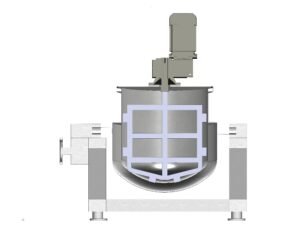
An industrial agitator maintains bulk circulation within the mixing vessel.
Its design should be selected according to the volume and rheological properties of the product.
In some applications, an agitator and inline homogenizer can work together to improve overall mixing efficiency.
Batch vs Continuous SLES Dilution System
| Factor | Batch Dilution | Continuous Dilution |
|---|---|---|
| Production method | Defined quantities per batch | Metered continuous feed |
| Equipment | Mixing tank with suitable agitation/recirculation | Inline mixer with controlled feed systems |
| Flexibility | Suitable for varying batch sizes | Suitable for sustained production |
| Process control | Batch weighing and quality checks | Continuous dosing and concentration control |
| Typical selection | Flexible production schedules | Higher-volume, repeated production |
The best configuration depends on plant capacity, available space, production schedules, required automation, and overall investment.
7. Common Problems During SLES Dilution and Their Solutions
Even with the correct dilution ratio, improper processing can cause production problems.
| Common Problem | Possible Cause | Recommended Action |
|---|---|---|
| Excessive gel formation | Incorrect addition sequence or concentrated pockets | Add SLES into water with effective mixing |
| High SLES viscosity | Concentration, temperature, or electrolyte effects | Verify active matter, temperature, and formulation |
| Undissolved SLES lumps | Inadequate dispersion | Improve concentrate dosing and mixing configuration |
| Excessive foam | Air incorporation during agitation | Reduce surface turbulence and use controlled recirculation |
| Inconsistent active matter | Incorrect weighing or variable raw material | Use verified batch calculations and measured feed quantities |
| Long mixing time | Insufficient circulation or poorly matched equipment | Review agitator and inline mixer design |
By addressing these challenges during equipment selection and process planning, manufacturers can reduce operational disruptions and improve product consistency.
8. Benefits of Using an Industrial SLES 70 Dilution System
For manufacturers regularly processing concentrated surfactants, a properly engineered SLES dilution setup can provide several advantages.
Improved Batch Consistency
Controlled feeding and mixing help produce a more uniform solution.
Better Handling of High-Viscosity Raw Material
Appropriate pumps and mixing equipment make concentrated SLES easier to process.
Reduced Manual Intervention
Metered dosing, monitored temperatures, and automation can improve repeatability and reduce manual handling.
Better Production Flexibility
A suitable system can be designed for different batch sizes or integrated into an existing liquid detergent manufacturing line.
Potential Cost Savings
Local dilution of concentrated SLES can reduce the quantity of water transported and stored, although actual savings depend on raw-material prices, utilities, equipment, and plant operating costs.
9. How Mecworks Innovation Supports Industrial SLES Dilution
At Mecworks Innovation, we understand that efficient chemical processing requires the right combination of mixing technology, equipment reliability, and process control.
As a manufacturer of industrial wet mixing and homogenization equipment, Mecworks Innovation offers solutions relevant to detergent, chemical, and personal care manufacturing.
Our equipment range includes:
- Industrial Mixing Tanks
- Designed for batch mixing and blending operations with application-specific agitator configurations.
- Inline Homogenizers
- Rotor-stator mixing equipment that can be evaluated for concentrated surfactant dispersion and liquid recirculation applications.
- Industrial Agitators
- Mixing solutions for maintaining bulk product circulation and consistent blending.
For manufacturers planning an SLES 70 dilution system, these technologies can form part of a customized processing arrangement based on the required capacity and raw-material characteristics.
The final equipment configuration should be established through application review and material trials.
Why Work With Mecworks Innovation?
- Customizable industrial mixing equipment
- Solutions for chemical and detergent manufacturing
- Stainless steel equipment options
- Batch and inline mixing technologies
- Equipment configurations suited to different production capacities
- Engineering-focused machinery selection
Whether you are establishing a new detergent manufacturing facility or upgrading an existing mixing line, selecting the right equipment is essential for consistent and efficient operations.
10. Frequently Asked Questions About SLES Dilution
Q1. How much water is needed to dilute 1 kg of SLES 70% to 28%?
Assuming exactly 70% active matter, 1 kg of SLES 70% requires 1.5 kg of water.
This produces 2.5 kg of SLES solution containing 28% active matter.
Q2. What is SLES liquid 28 used for?
SLES liquid 28 is used as a surfactant raw material in liquid detergents, dishwashing liquids, hand washes, shampoos, and various cleaning formulations.
It may be combined with additional ingredients depending on the finished product requirements.
Q3. Why does SLES viscosity increase when water is added?
At certain intermediate concentrations, SLES forms structured, highly viscous phases.
This behaviour can result in gel formation and difficult processing, particularly if water is added directly to concentrated SLES.
Q4. Can SLES 70% be diluted without an inline homogenizer?
Yes. Some applications can be processed with appropriately designed conventional mixing equipment.
However, an inline homogenizer can be useful where rapid dispersion, difficult viscosity conditions, or higher production volumes justify additional mixing capability.
Q5. What temperature should be used for SLES dilution?
A controlled range around 25–35°C is commonly used in high-active surfactant dilution applications.
The actual temperature should be selected based on supplier recommendations, equipment limitations, and process trials.
Q6. Is SLES 28% the same as a finished liquid detergent?
No. SLES 28% is generally a surfactant raw material or intermediate.
A finished detergent may contain other surfactants, thickeners, preservatives, fragrances, builders, and additional ingredients.
Q7. Which machine is best for an SLES 70 dilution system?
The ideal choice depends on production capacity, viscosity, and desired operating method.
A mixing tank with an appropriately designed agitator and inline homogenizer is one potential solution for industrial batch processing.
Conclusion
Diluting SLES 70% to 28% is an important operation in the manufacture of detergents, personal care products, and industrial cleaning formulations.
Although the dilution calculation is straightforward, successful industrial processing depends on much more than the correct quantity of water.
Factors such as SLES viscosity, controlled addition, mixing efficiency, temperature, and equipment design can significantly influence production consistency.
For a nominal 70% concentrate, producing 1,000 kg of SLES 28% requires 400 kg of SLES 70% and 600 kg of water. However, these quantities must be adjusted when actual raw-material specifications differ.
Choosing suitable industrial mixing machinery helps manufacturers manage concentrated surfactants more effectively and achieve reliable processing.
Looking for SLES Dilution Mixing Equipment?
Improve your chemical manufacturing process with industrial mixing solutions from Mecworks Innovation.
If you are planning a new SLES dilution facility, expanding detergent production, or upgrading existing mixing equipment, our team can help you evaluate suitable mixing tanks, agitators, and inline homogenizers for your application.
Discuss your SLES 70% to 28% dilution requirements with Mecworks Innovation.
Share your desired batch capacity, incoming SLES concentration, and production requirements so our team can recommend an appropriate equipment configuration.
Website: https://mecworksinnovation.com/Explore our Inline Homogenizers: https://mecworksinnovation.com/product/machines/high-shear-homogenizer/inline-homogenizer/Contact: +91 9773762449Email: mecworksinnovation@gmail.comMecworks Innovation — Engineering Efficient Industrial Mixing Solutions.
