
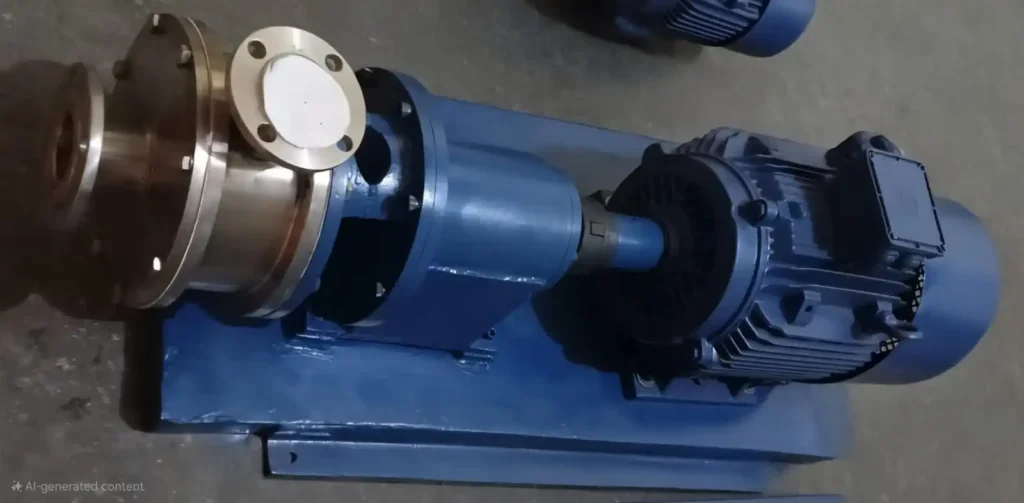
Colloid Mill Machine Price in India | Buying Guide
Choosing the right colloid mill machine in India is an important investment decision for manufacturers involved in food processing, pharmaceuticals, cosmetics, chemicals, and bitumen emulsion production. Whether you are establishing a new manufacturing facility or upgrading existing production equipment, understanding the colloid mill machine price in India can help you select equipment that meets your production requirements without unnecessary expenditure. Colloid mill prices vary depending on processing capacity, motor power, construction materials, rotor-stator design, and customization requirements. In this comprehensive buying guide, we explore the factors influencing colloid mill pricing, available machine capacities, industrial applications, and essential considerations before purchasing a colloid mill. What Is a Colloid Mill Machine? A colloid mill machine, also known as a colloidal mill, is industrial wet-processing equipment designed for particle size reduction, emulsification, homogenization, and dispersion. It operates using a high-speed rotating rotor and a stationary stator. As the product passes through the narrow gap between these components, mechanical shear forces help break down particles or droplets and distribute them throughout the material. The resulting product can achieve improved uniformity, texture, and emulsion stability, depending on the formulation and operating conditions. Colloid mills are commonly used in: Food processing: Peanut butter, sauces, pastes, mayonnaise, and other food emulsions. Pharmaceutical manufacturing: Ointments, suspensions, creams, and pharmaceutical emulsions. Cosmetics: Lotions, skincare creams, gels, and cosmetic emulsions. Chemical manufacturing: Adhesives, dispersions, coatings, and chemical emulsions. Bitumen processing: Bitumen emulsions for road construction and infrastructure applications. For manufacturers requiring consistent wet milling and emulsification, an appropriately selected colloid mill can improve production efficiency and product uniformity. Colloid Mill Machine Price in India One of the most common questions industrial buyers ask is: How much does a colloid mill machine cost in India? Based on publicly advertised Indian supplier listings, indicative colloid mill prices range from approximately ₹50,000 for basic models to several lakh rupees for advanced or customized industrial equipment. Approximate Colloid Mill Price Range Machine Category Indicative Price in India Basic or entry-level colloid mill ₹50,000 – ₹1,00,000 Standard 3–5 HP industrial colloid mill ₹1,10,000 – ₹1,75,000 Higher-specification or customized systems ₹2,00,000 – ₹10,00,000+ Note: These are broad market indications based on publicly listed supplier prices as of October 2026, not official MECWORKS Innovation quotations. Actual prices depend on technical specifications, materials, accessories, and project requirements. GST, installation, and transportation may be additional. A lower initial machine price does not necessarily mean lower long-term production costs. Buyers should also evaluate processing efficiency, maintenance requirements, spare-part availability, and equipment durability. At MECWORKS Innovation, colloidal mill solutions are available with configurations tailored to different industrial processing requirements. 7 Major Factors Affecting Colloid Mill Machine Price in India Understanding the factors influencing pricing helps manufacturers make more informed purchasing decisions. 1. Machine Capacity and Production Output Processing capacity is one of the most important factors influencing colloid mill selection and cost. Capacity is generally expressed in litres per hour (LPH) or kilograms per hour (kg/hr), depending on the application. A machine intended for small-batch production may require a different motor, rotor-stator assembly, and feeding arrangement from one designed for high-volume continuous operation. Higher production requirements may involve larger processing components, more powerful motors, and additional engineering. However, actual output also depends on material viscosity, inlet particle size, desired fineness, and processing conditions. 2. Motor Power and Operating Speed The motor provides the mechanical power required to operate the colloid mill’s rotor-stator system. Industrial machines are available with different motor ratings depending on the product being processed and the required output. Higher motor power may be necessary when processing viscous materials or operating at higher production rates. However, selecting a machine solely on horsepower is not advisable. Rotor geometry, operating speed, shear intensity, and product characteristics also influence performance. MECWORKS Innovation offers colloidal mill configurations with operating speeds of up to 6,000 RPM, depending on the model and application. 3. Material of Construction: SS304 vs SS316L The construction material significantly affects the cost and suitability of a colloid mill machine. Two commonly used stainless steel grades are SS304 and SS316L. SS304 Stainless Steel SS304 is widely used for general food processing and industrial applications where the material provides adequate corrosion resistance. It can be a cost-effective option for compatible products and operating conditions. SS316L Stainless Steel SS316L offers enhanced corrosion resistance in certain environments and is frequently specified for pharmaceutical, specialty chemical, and other demanding processing applications. Machines using SS316L contact parts generally cost more because of material and manufacturing requirements. The correct grade should be selected based on chemical compatibility, hygiene requirements, cleaning methods, and the intended application. 4. Rotor-Stator Design and Grinding Performance The rotor-stator assembly is the central working component of a colloid mill. Its design influences shear intensity, particle or droplet size reduction, product uniformity, and energy consumption. Depending on the process, manufacturers may require specialized rotor-stator geometries, adjustable clearances, or multistage configurations. More demanding processing requirements can increase manufacturing complexity and overall equipment cost. Before selecting a machine, buyers should confirm whether the equipment can achieve the required product quality under realistic production conditions. 5. Automation and Control Systems The level of automation also influences the colloid mill price. Basic machines may use straightforward motor controls and manual operating adjustments. More advanced production systems may require variable-frequency drives, temperature monitoring, automated valves, process interlocks, and integration with existing manufacturing lines. Automation can reduce manual intervention and improve process repeatability, but it also adds to the initial investment. 6. Application-Specific Customization Not every manufacturing process requires the same colloid mill configuration. For example, peanut butter processing, cosmetic emulsification, and bitumen emulsion production involve different material properties and operating requirements. These applications can vary significantly in viscosity, temperature, abrasiveness, processing conditions, and required output. Customized construction materials, sealing arrangements, heating or cooling provisions, and feeding systems may therefore be necessary. Such modifications affect the final machine price. 7. Installation, Maintenance and After-Sales Support The purchase price represents only one part of the equipment’s total cost. Additional expenses may include transportation, installation, commissioning, operator training, replacement components, and
